
HYELE H24 Solar 4G Data Logger
Measure anything, anywhere. No mains power, no cabling, no software fees.
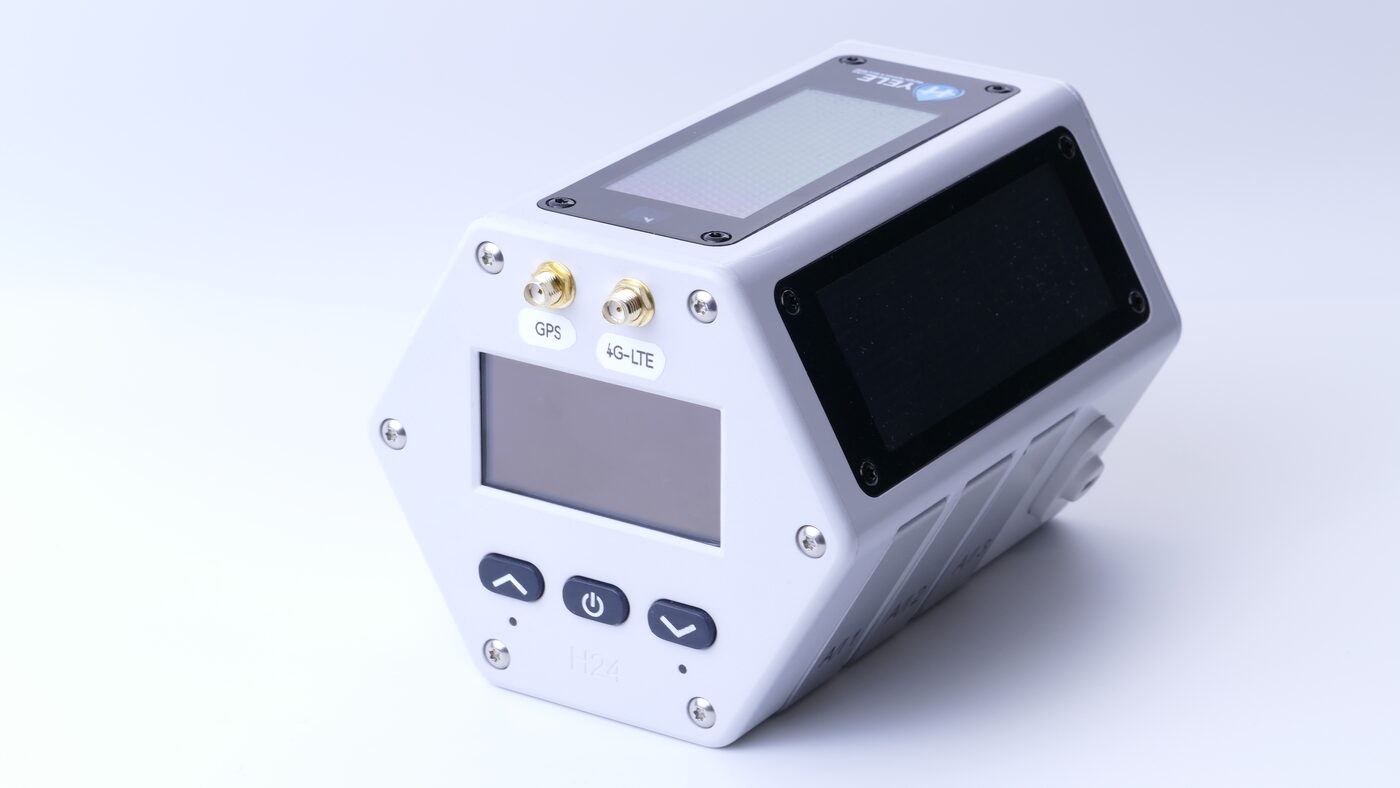
H24 puts sensor inputs, a 4G modem, GNSS time sync, solar power and battery into one sealed 1 kg unit. Connect your sensors, mount it, and see the data in HYELE's free web app.
- Designed in HK Science Park
- IP67 sealed aluminium housing
- −20 °C to +80 °C
- Designed to RED 2014/53/EU
- IEC 60068 shock & vibration
One unit instead of a cabinet full of parts
A typical remote monitoring point needs a logger, a modem, a solar kit, a battery box, an enclosure and someone to wire them together. H24 ships as one sealed unit.
The usual setup
- Separate logger, modem, solar regulator, battery and enclosure
- Mains power or a separate solar installation on site
- Logs once a minute or slower, so short pressure spikes and vibration are missed
- Per-device software licences or a cloud subscription
- More parts to wire, test and maintain
With HYELE H24
- Inputs, 4G, GNSS, solar panels and battery in one 1 kg IP67 unit
- Runs on built-in solar. With no sun at all: about 10 days of continuous logging, or about 1.7 years at 15-minute logging
- Samples up to 1 kHz per channel when an event or test needs it
- Free HYELE web app, or send data to your own system
- Magnetic mount and anti-theft cord: no cabinet to build
How your data gets to you
Sensors connect to H24. H24 sends the data over 4G. You view it in the HYELE web app or pull it into the system you already use.
1. Your sensors
Pressure, level, flow, tilt, temperature or any 4–20 mA, 0–24 V, pulse or Modbus RTU device.
2. HYELE H24
Logs, timestamps with GNSS to 0.1 ms, keeps a copy on board until the server confirms receipt.
3. 4G LTE
Physical SIM or eSIM. Data travels over MQTT, so a weak signal never means lost data.
4. Your screen
The free HYELE web app, your own MQTT broker, or your SCADA / PLC over Modbus RTU.
Included free
The HYELE web app comes with every H24
No subscription for data acquisition. Open a browser and you can:
- See every device on a map, with battery, signal and connection status
- Watch live readings from each sensor
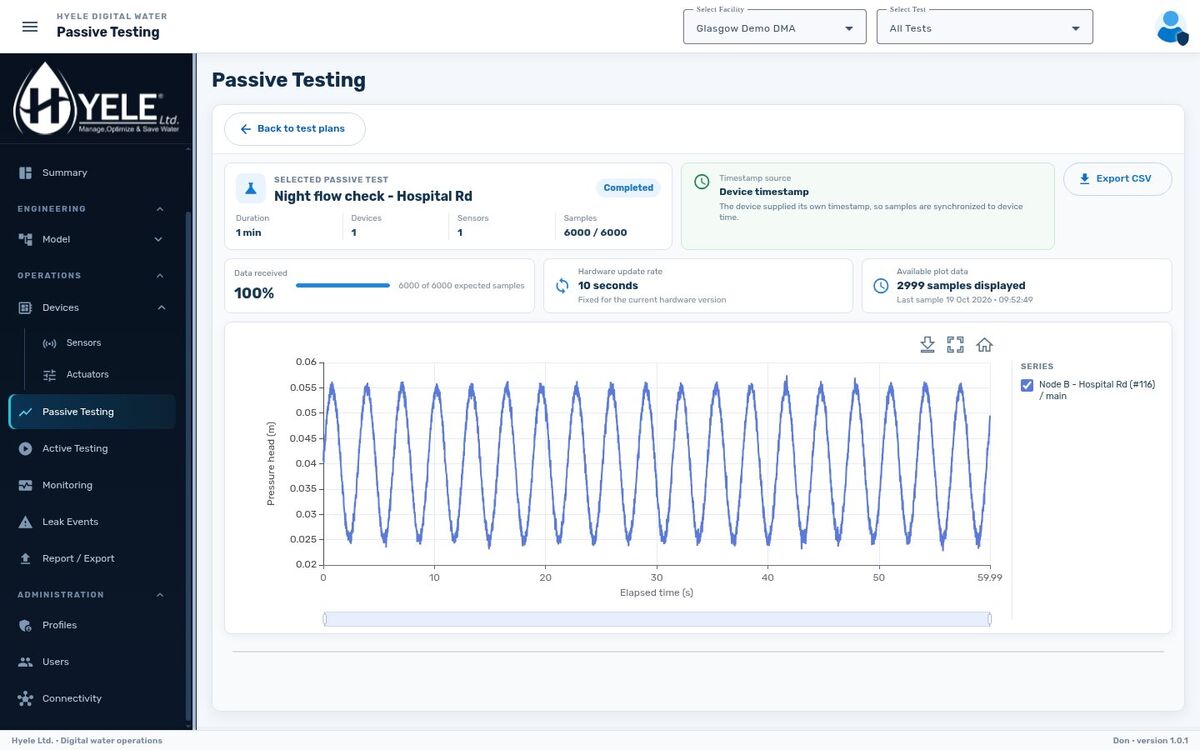
- Schedule high-rate recording sessions, for example a nightly 1 kHz pressure check
- Trigger a test remotely and switch a valve or relay through the 24 V outputs while recording
- Set alert rules and receive email notifications
- Build reports and export data to CSV for Excel
- Add users and control what each person can see and do
Where H24 is used
HYELE built H24 for water networks. The same inputs work for any site that needs reliable readings without power or cabling.
Water supply & district cooling
Measure: pipe pressure, pressure surges (water hammer), flow, reservoir level.
Connect: 4–20 mA pressure transducers, pulse-output flow meters, level sensors.
Example: catch a surge that lasts under a second and see exactly when it happened at each site.
Civil & geotechnical
Measure: groundwater level, ground and structure tilt, vibration from construction.
Connect: 4–20 mA piezometers and tiltmeters, plus the built-in triaxial accelerometer.
Example: monitor a slope or excavation where there is no power and no network cable.
Oil, gas & process pipelines
Measure: line and wellhead pressure, flow, pipeline vibration.
Connect: 4–20 mA transmitters, pulse meters, Modbus RTU instruments.
Example: remote pipeline sections in hot climates, rated up to +80 °C.
Solar farms & remote assets
Measure: irradiance, wind, temperature, inverter and meter readings.
Connect: Modbus RTU over RS485/RS232, 4–20 mA weather sensors.
Example: add monitoring to an unmanned site without running new cables.
Building services & fire mains
Measure: fire main and sprinkler pressure, pump vibration, tank level.
Connect: 4–20 mA pressure and level sensors, built-in accelerometer.
Example: get an alert when fire main pressure drops, instead of finding out at inspection.
Something else?
If your sensor has a 4–20 mA, voltage, pulse or Modbus RTU output, H24 can most likely read it.
Tell us about your projectBuilt for the field
CNC-machined, anodised aluminium hexagonal housing. Every port is labelled and sealed. Delivered in a waterproof hard case.
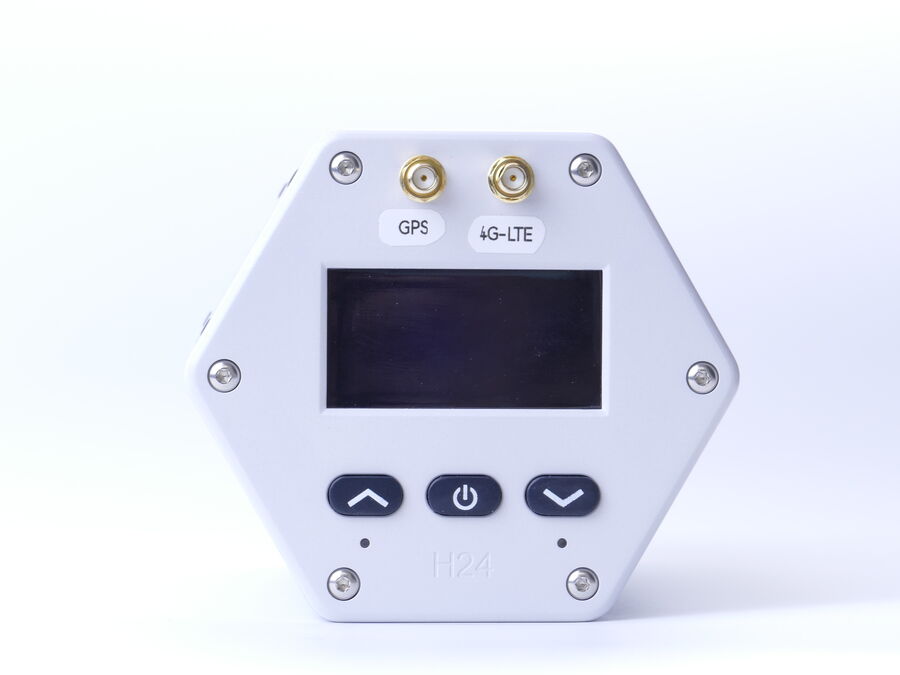
Sunlight-readable OLED, 3 keys, GPS and 4G antenna ports
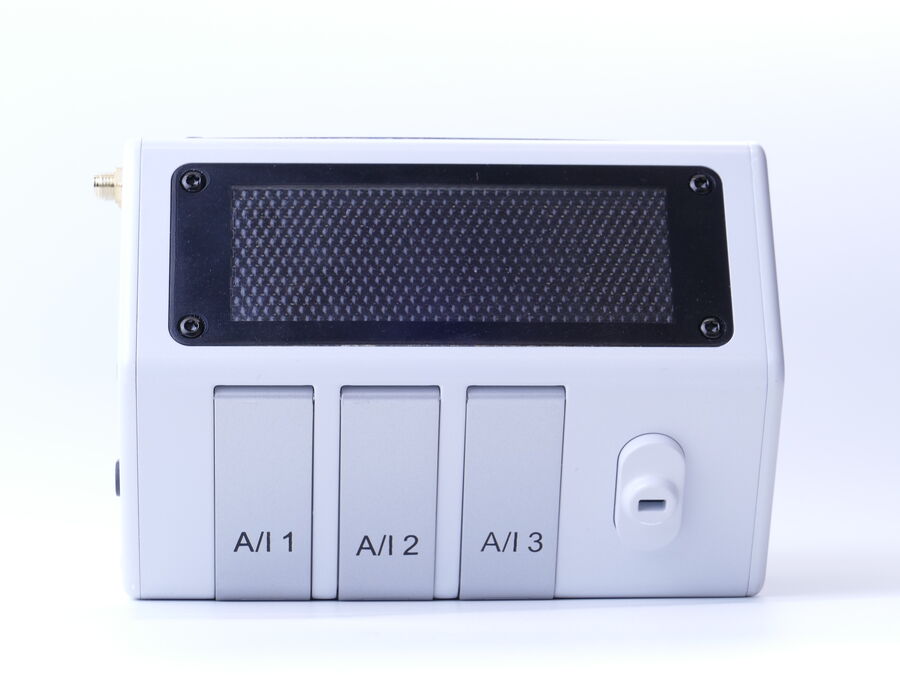
Analog inputs AI1–AI3 under sealed covers, solar panel above
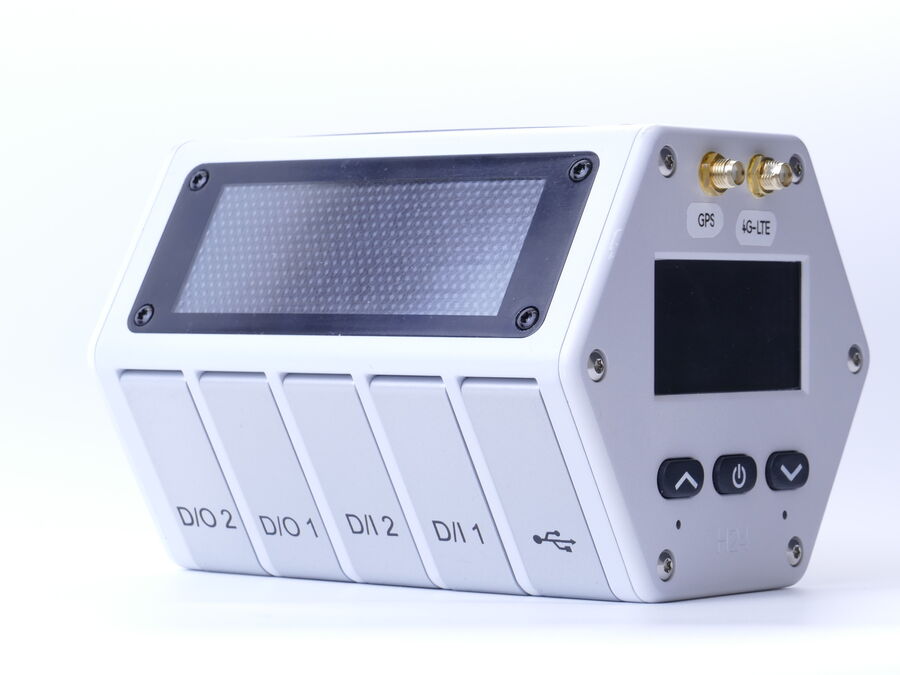
2 digital inputs, 2 × 24 V outputs, USB-C charging
Key specifications
4–20 mA, 0–20 mA, 0–24 V
24 V outputs, ≥500 mA, PWM
up to 6 kHz bandwidth
BeiDou, QZSS
MQTT v3
for SCADA and PLCs
USB-C PD up to 60 W
150 mm long
Frequently asked questions
How much does H24 cost?
From US$7,500. For 10 units or more, reply to your quotation with the quantity and we will send volume pricing.
Is there a software subscription?
No. The HYELE web app for data acquisition is free with every H24. If you prefer, send the data to your own MQTT broker or read it into your SCADA or PLC over Modbus RTU.
Which sensors can I connect?
Any sensor with a 4–20 mA, 0–20 mA or 0–24 V output on the four analog inputs; pulse-output meters on the two digital inputs; and Modbus RTU devices over RS485 or RS232. H24 can power the sensor itself (2–24 V excitation). Sensors are not included, but we can recommend or supply them.
What is the lead time?
H24 is built to order. We confirm the delivery date on your quotation.
Which SIM card do I need?
H24 takes a standard physical SIM and also supports eSIM. You can use your own local data plan, or ask us to quote one.
What happens if the 4G signal drops?
High-rate data is written to on-board memory at the same time as it is sent, and is only cleared after the server confirms it arrived complete. When the signal returns, nothing is missing.
How is it installed?
H24 has a built-in magnetic mount and an anti-theft security cord, so in most cases it attaches directly to a steel surface, pipe or cabinet. There is no separate enclosure, solar kit or power supply to install. We recommend fixing it where it is protected from tampering and theft, such as inside a locked cabinet, a valve chamber or a fenced area. The GPS and 4G antenna ports are designed for external antennas, so the unit can stay secured out of sight while a wired external antenna is run to the spot with the best signal. If the unit is installed where its solar panels get no sunlight, it can be powered from a DC supply through the USB-C port (5–30 V DC) or extended with an auxiliary battery.
Get a formal quotation
Email us a few details and we will reply with a PDF quotation.
Please include:
- Company name and country
- Contact person, phone and email
- What you want to measure
- Quantity
- Sensors you already have (if any)